12 Simple Ways to Make Your Living Room More Comfortable After 60
Your living room should be a place where you can relax, read, watch television, visit with friends and enjoy time with family. If the room no longer feels as comfortable or convenient as it once did, you may not need to redecorate or replace everything.
Small changes to seating, lighting, furniture placement and organization can make a noticeable difference. The goal is not to make your home look clinical or designed around age. It is to create a welcoming room that works well for the way you live now.
Walk through these ideas and choose the improvements that address a genuine frustration in your home. Some require no purchase at all, while others may help you identify a useful product or future furniture upgrade.
Disclosure: This article contains affiliate links. If you make a qualifying purchase through one of these links, we may earn a commission at no additional cost to you. As an Amazon Associate, we earn from qualifying purchases.
1. Begin With the Chair You Use Most
A beautiful chair is not necessarily a comfortable chair. The seat should support your body without forcing you to sink so deeply that standing becomes difficult.
Sit with your feet resting comfortably on the floor and your back supported. Notice whether the seat is too low, too deep or too soft. Also consider whether the armrests are positioned where you can use them naturally when sitting down or standing.
If the chair is fundamentally unsuitable, adding more cushions may not solve the problem. A supportive recliner or lift chair may be worth considering when it addresses a real mobility or comfort need, but the correct choice depends on the user’s height, body proportions and available space.
2. Add Support Without Overloading the Chair
A carefully selected cushion can improve an otherwise suitable chair, but several loose pillows may reduce usable seat space and make it harder to maintain a comfortable position.
Consider one supportive lumbar pillow or a firm seat cushion designed for the type of chair you own. Measure the chair before purchasing anything so the cushion fits without sliding or raising the seat to an awkward height.
Choose a removable, washable cover when possible. Stop using any cushion that makes the chair feel unstable or creates difficulty when sitting or standing.
See Supportive Lumbar-Pillow Options
3. Place a Useful Table Beside Every Main Seat
A convenient side table prevents repeated reaching toward a distant coffee table. It gives you a secure place for a drink, book, eyeglasses, phone or television remote.
The tabletop should be close to the height of the chair arm and easy to reach without twisting. Make sure the base does not extend into the walking path or interfere with your feet when you stand.
If space is limited, consider a narrow table or a stable C-shaped table that fits beside appropriate furniture. Check its dimensions carefully and avoid lightweight designs that tip easily.
4. Improve Task Lighting
One overhead light rarely provides ideal illumination for every living-room activity. Reading, sewing, completing a puzzle or reviewing paperwork may require light directed toward the task.
Place a floor or table lamp beside your preferred chair. The light should illuminate the page or work surface without shining directly into your eyes or reflecting strongly from the television.
A lamp with a simple switch, adjustable brightness and stable base can make the room easier to use at different times of day. Route the cord behind furniture or along the wall rather than across a walking path.
See Adjustable Reading Floor Lamps
5. Arrange Furniture Around How You Actually Live
Furniture is often arranged around the shape of a room rather than the people using it. Consider what you normally do in the living room and position the furniture accordingly.
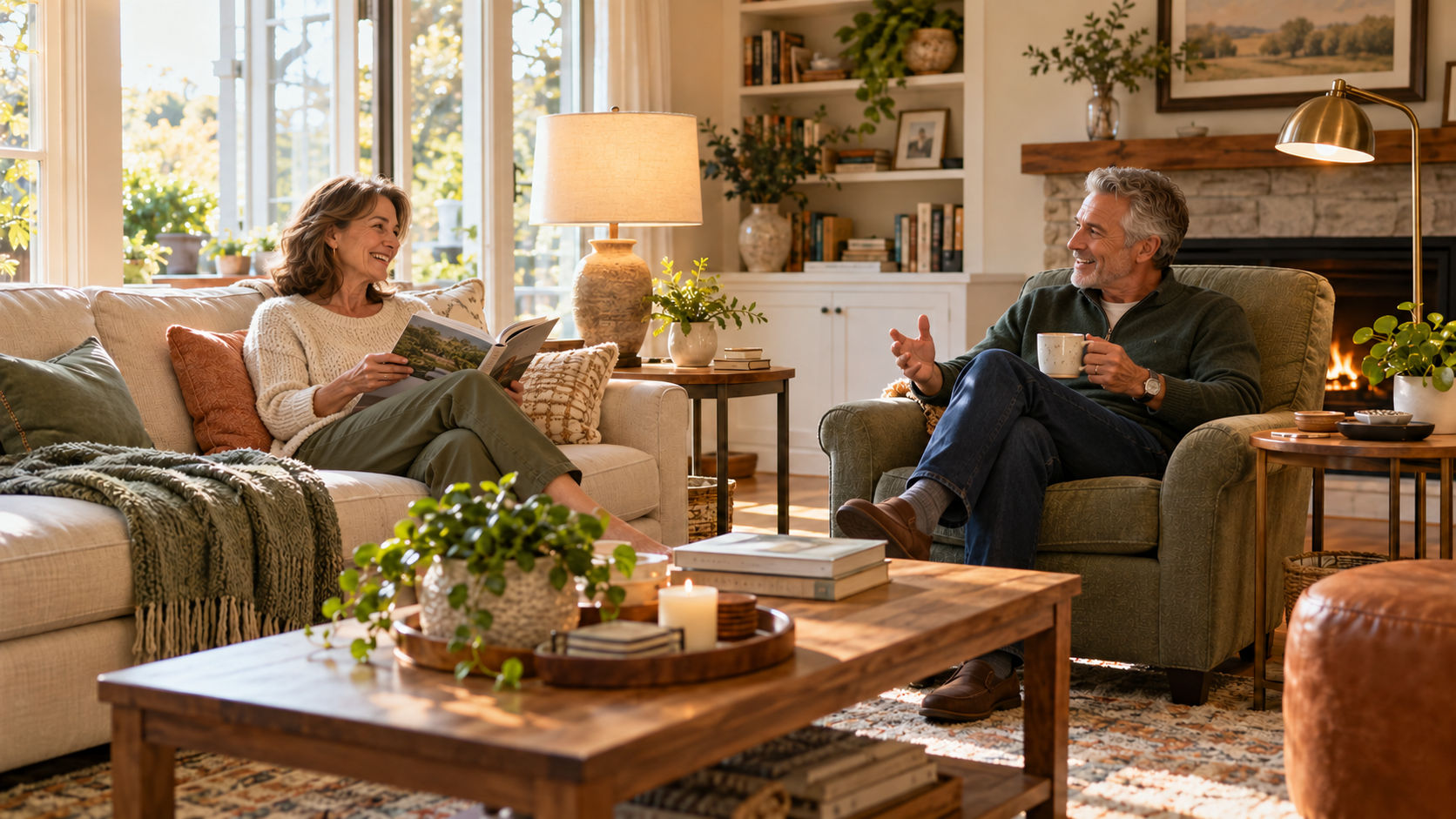
A reading chair should have good lighting and a nearby table. Conversation areas should allow people to see and hear one another comfortably. Frequently used seats should have a clear route to the doorway, kitchen and bathroom.
Leave enough room to walk without squeezing around a coffee table or navigating around decorative furniture. A few inches of additional clearance can make the room feel larger and easier to use.
6. Reduce Glare From Windows and Lamps
Natural light makes a living room inviting, but direct sunlight can produce glare on a television, tablet or glossy reading material. Bright uncovered windows can also create uncomfortable contrast between the window and the rest of the room.
Use adjustable blinds, light-filtering curtains or shades to manage the light throughout the day. The goal is not to darken the room completely—it is to soften harsh light while retaining a pleasant view and useful daylight.
Try repositioning lamps or the television before purchasing anything. A small change in angle may solve the problem.
See Light-Filtering Curtain Options
7. Make Television Viewing More Comfortable
A television mounted too high or positioned far to one side may require you to tilt or turn your head for long periods. The most comfortable location generally allows you to look mostly forward from your usual seat.
Before moving or mounting a television, sit in your preferred chair and note your natural line of sight. Screen size, viewing distance and room arrangement should all be considered.
Sound matters as well. Before increasing the volume, review the television’s audio settings. Dialogue-enhancement features, clearer speaker placement or closed captions may improve the experience without making the entire room louder.
8. Keep Remotes and Small Essentials Together
Remote controls, eyeglasses, charging cables and pens have a way of disappearing between cushions or spreading across every available surface.
Give these items one consistent home. A small tray, attractive box or chair-side organizer can keep them together while reducing visual clutter.
Select an organizer that fits securely without interfering with your ability to use the chair. Avoid anything with long straps or loose sections that extend into the walking area.
See Chair-Side Remote Organizers
9. Choose Throws That Stay Manageable
A soft throw can make reading or watching television more comfortable, but an oversized blanket can collect on the floor or become tangled around your feet.
Choose a lightweight, washable throw that provides warmth without excessive bulk. Fold it over the back or arm of the chair when it is not being used rather than leaving it on the seat or floor.
If several blankets have accumulated in the room, keep one or two favorites readily available and store the remainder elsewhere.
10. Manage the Room Temperature
A room can look inviting and still feel uncomfortable if it is consistently too warm, cool or stuffy. Check whether furniture or curtains are blocking heating and cooling vents.
A ceiling fan or quiet portable fan may improve air circulation when used appropriately. Position portable equipment where it will not obstruct a walkway, and keep electrical cords safely out of the way.
During cooler weather, use lightweight layers and throws before relying on portable heating equipment. If you use a space heater, follow the manufacturer’s directions and current fire-safety guidance carefully.
11. Reduce Clutter Without Removing Personality
A comfortable living room should still contain photographs, books, artwork and meaningful objects. The objective is not to strip the room of personality—it is to keep everyday surfaces and walking areas manageable.
Begin with the coffee table and the area around your favorite chair. Remove items that belong elsewhere, organize loose papers and give frequently used belongings a specific location.
Rotate decorative items rather than displaying everything at once. A smaller collection often receives more attention and is easier to keep clean.
12. Create a Space That Welcomes Other People
Comfort also means being able to enjoy the room with family and friends. Make sure visitors have an accessible place to sit and somewhere convenient to set down a drink.
Arrange at least some seating to encourage conversation rather than pointing every chair directly toward the television. Keep a lightweight chair available if you occasionally need additional seating, but avoid crowding the room with furniture used only a few times each year.
Consider lighting, room temperature and sound from a guest’s perspective. A room that supports easy conversation usually feels more welcoming to everyone.
Start With the Change You Will Notice Every Day
You do not have to replace all your furniture or complete an expensive makeover. Begin with the issue you encounter most often.
If reading is difficult, improve the lamp beside your chair. If you repeatedly lose the remote, create one storage location. If standing from your favorite seat is uncomfortable, evaluate whether the chair still provides the right height and support.
Small, thoughtful adjustments can make your living room more comfortable, functional and inviting while allowing it to continue looking and feeling like your home.
This article provides general household information and is not individualized medical, occupational-therapy or home-safety advice. Consult an appropriate qualified professional when your needs require personal evaluation.