Infrared vs. Traditional Sauna: Which Is Better for Your Home?
Disclosure: This article contains affiliate links. If you request information or make a purchase through one of these links, we may earn a commission at no additional cost to you.
Choosing between an infrared sauna and a traditional sauna is not simply a matter of deciding which technology is “better.” Both can create a warm, inviting retreat, but they produce distinctly different experiences.
A traditional sauna surrounds you with intensely heated air and can include steam from water placed on approved sauna stones. An infrared sauna uses radiant heaters to warm the occupants and surrounding surfaces while generally maintaining a different air-temperature environment.
Your ideal choice depends on the kind of warmth you enjoy, the room available, the installation requirements and how you imagine using the sauna.
This guide compares the two approaches without assuming that one is right for every home.
How a Traditional Sauna Works
A traditional sauna uses a heater to raise the temperature of the room’s air. Depending on the design, the heater may be electric or wood-burning.
Many traditional saunas include approved sauna stones. Water can be carefully added to the heated stones according to the manufacturer’s instructions, creating a temporary increase in humidity and the familiar wave of steam associated with a classic sauna.
Traditional sauna users often enjoy:
- Higher air temperatures
- The option to introduce controlled bursts of steam
- A classic Nordic-style atmosphere
- The sound and ritual of adding water to sauna stones
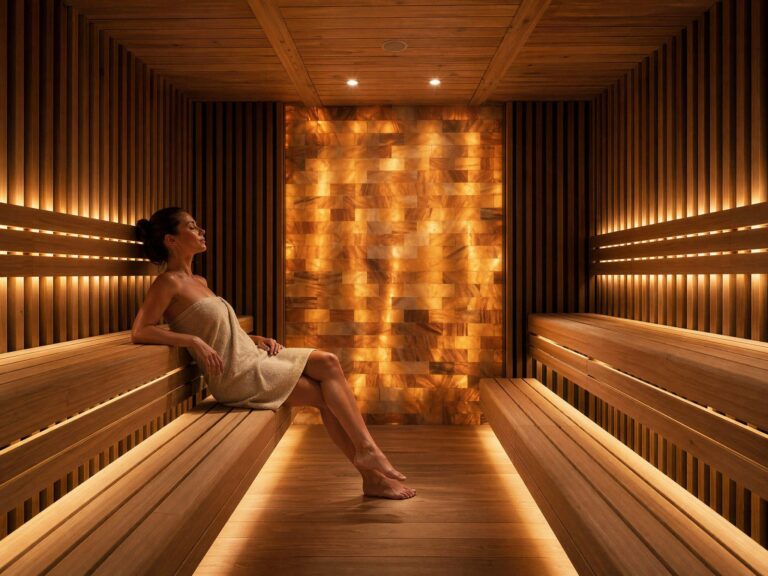
- Wood-lined rooms with tiered benches
This may be the better choice for someone who already knows and enjoys the traditional high-temperature sauna experience.
How an Infrared Sauna Works
An infrared sauna uses radiant heaters rather than relying primarily on very hot room air. Infrared energy is experienced as warmth, even though it is outside the visible-light range.
The heating panels are normally positioned around the seating area according to the manufacturer’s design. Because heater placement affects how evenly the warmth is experienced, a properly engineered layout matters—especially in a custom room.
Infrared sauna users may appreciate:
- Radiant warmth
- A different air-temperature experience from a traditional sauna
- Heater zones positioned around the seating area
- Modern electronic and Wi-Fi-enabled controls
- The ability to build within a custom-size room
- Optional integrated lighting and red-light features
An infrared sauna does not usually recreate the traditional experience of pouring water over heated stones. Someone who especially enjoys steam and very hot room air may therefore prefer a traditional design.
Temperature Experience
The most noticeable difference between the two sauna types is how the warmth feels.
A traditional sauna heats the air to a higher temperature. When you enter, the entire room immediately feels hot. Adding water to approved stones can briefly intensify the experience by increasing the humidity.
An infrared sauna uses radiant warmth directed toward the occupants and surrounding surfaces. The room may not feel identical to a traditional high-temperature sauna, even when the experience feels comfortably warm.
The only reliable way to know which you prefer is to try both. Marketing descriptions cannot fully communicate how each type feels in person.
Steam and Humidity
If the ritual of steam is important to you, a traditional sauna is likely the stronger choice.
Traditional sauna heaters designed for stones may permit small amounts of water to be added according to the manufacturer’s directions. That creates a brief, noticeable change in humidity.
Infrared heating systems generally are not designed for water to be poured on their panels or electrical components. Unless a manufacturer specifically approves otherwise, an infrared sauna should be treated as a dry environment.
Never add water, oils or other substances to any heater unless the manufacturer expressly permits it and provides instructions.
Warm-Up Time and Convenience
Warm-up time varies by sauna size, heater capacity, insulation, starting temperature and construction.
Traditional saunas generally need time to heat the entire room and the sauna stones. Infrared systems may create usable radiant warmth without first producing the same high air temperature.
Convenience also depends on the controls. Some modern infrared systems offer Wi-Fi controls that allow the owner to begin preheating remotely within the manufacturer’s operating guidelines.
If you expect to use the sauna frequently, ask each company:
- How long does this model typically take to warm up?
- Can it be scheduled or controlled remotely?
- Does remote operation include appropriate safety controls?
- Can separate heating zones be adjusted?
- How does the system indicate that it is ready?
Installation Requirements
Both sauna types require more planning than placing an ordinary piece of furniture in a room.
A traditional sauna may require:
- An appropriately sized electric or wood-burning heater
- Manufacturer-approved clearances
- Proper ventilation
- Suitable wall, ceiling and floor construction
- Electrical work or an approved chimney system
- Heat-resistant lighting and fixtures
An infrared sauna may require:
- Heaters positioned for the specific room and bench layout
- A compatible power supply and control system
- Manufacturer-specified wiring and clearances
- Proper ventilation
- Suitable surrounding materials
- Installation by qualified contractors and a licensed electrician
Do not assume that either sauna can use an ordinary household outlet. Electrical requirements vary according to room size, equipment and local code.
Prefabricated Kit or Custom Room?
Both infrared and traditional saunas are available as standard-size kits. A kit can be a practical choice when its dimensions fit the available space and its appearance complements the home.
A custom sauna may be preferable when:
- The room has unusual dimensions
- You want to incorporate existing windows or architectural features
- The sauna must accommodate a specific bench arrangement
- You want particular wood, glass or lighting details
- You are creating a larger indoor or outdoor retreat
- You want the sauna to feel integrated with the surrounding room
With either approach, compare what is included. A sauna package may not include local construction, electrical work, permits, flooring or installation labor.
Space and Layout
A sauna should have enough room to sit comfortably without feeling crowded, but making it unnecessarily large may increase cost and heating requirements.
Before requesting estimates, measure:
- Interior length and width
- Ceiling height
- Door and window locations
- Available wall space
- Floor area outside the entrance
- Nearby electrical equipment
- Any plumbing, vents or permanent obstructions
Consider how many people will realistically use the sauna at the same time. A beautifully designed one- or two-person sauna may be more enjoyable than a larger room that consumes space but rarely serves additional users.
Seating and Ease of Entry
Bench design affects the everyday experience in both sauna types.
Traditional saunas frequently use two-tier seating because warmer air rises. Upper benches normally provide a hotter experience, while lower benches offer a different temperature level.
Infrared rooms often position heaters around a primary seating level. Bench placement is coordinated with the heater layout so the occupant receives reasonably even radiant warmth.
Regardless of sauna type, consider:
- Bench height and depth
- Whether you want to sit upright or recline
- How easily you can sit down and stand up
- Whether climbing to an upper bench is comfortable
- Door width and threshold height
- Clear floor space inside and outside the entrance
- The placement of controls and door hardware
If easier access matters, make it part of the initial design rather than trying to alter the sauna later.
Materials and Appearance
Both sauna types can be beautiful. The visual difference depends more on the design than on the heating method.
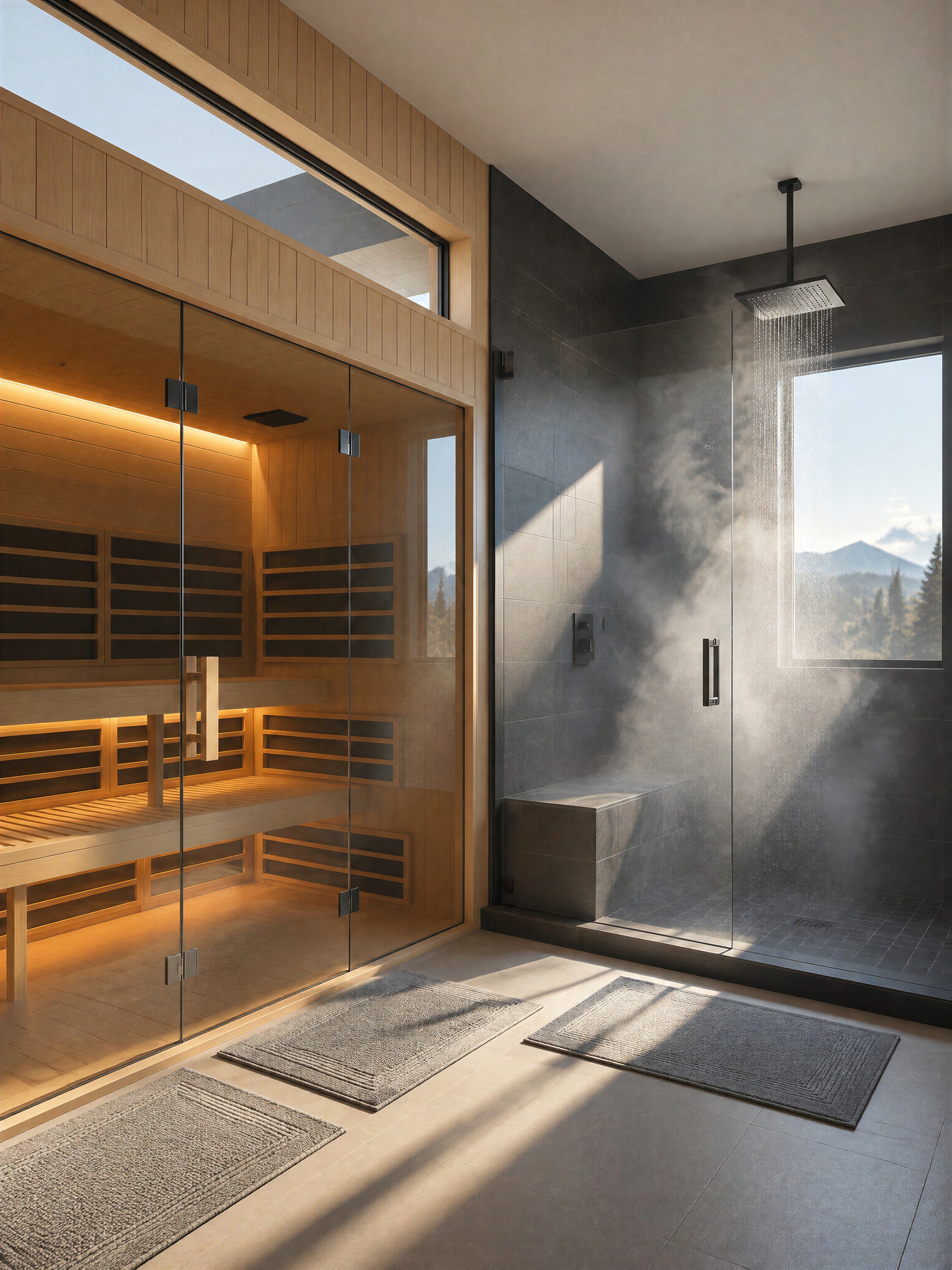
A traditional sauna often emphasizes natural wood, sauna stones and tiered benches. An infrared room may include wood walls, large glass panels, modern controls, indirect lighting and integrated heater frames.
Ask whether the quoted materials are solid wood, veneer, plywood or another construction. Also compare:
- Wood species and grade
- Visible knots and grain
- Aroma
- Surface comfort
- Cleaning requirements
- Glass thickness and placement
- Door hardware
- Lighting options
The sauna should feel like a permanent part of your home rather than an appliance that was placed wherever it happened to fit.
Maintenance
Both sauna types require routine care.
Common maintenance may include:
- Allowing the room to dry after use
- Cleaning benches and frequently touched surfaces
- Inspecting doors, hardware and seals
- Checking ventilation openings
- Following the manufacturer’s heater-maintenance instructions
- Keeping liquids away from unapproved electrical components
A traditional sauna may also require care of the heater and stones. Wood-burning designs introduce additional chimney, ash and fire-safety responsibilities.
An infrared system contains heaters, controls, wiring and power components that must be maintained according to the manufacturer’s documentation.
Operating Costs
Operating costs depend on local utility rates, room size, insulation, heater capacity, warm-up time, temperature and frequency of use.
Do not rely on a generic claim that one sauna type is always cheaper to operate. Ask each supplier for the proposed equipment load and estimated warm-up behavior for your specific design. A local electrician may help you understand the likely electrical demand.
Also consider ownership costs beyond energy:
- Routine maintenance
- Replacement heaters or controls
- Sauna stones where applicable
- Local service availability
- Warranty exclusions
Comparison at a Glance
| Consideration | Infrared sauna | Traditional sauna |
|---|---|---|
| Heat experience | Radiant warmth | Hot room air |
| Steam | Generally a dry experience | Possible with approved heater and stones |
| Controls | Often electronic, zoned or Wi-Fi enabled | Varies from simple to advanced |
| Seating | Coordinated with heater placement | Often uses multiple bench levels |
| Best suited for | People who prefer radiant warmth and modern controls | People who prefer hotter air and the classic steam ritual |
When an Infrared Sauna May Be the Better Choice
Consider infrared if you:
- Prefer radiant warmth over very hot room air
- Do not need the traditional steam experience
- Want modern controls or adjustable heater zones
- Have a room requiring a customized heater layout
- Want an indoor retreat integrated with a bathroom or wellness area
When a Traditional Sauna May Be the Better Choice
Consider traditional if you:
- Already know that you enjoy higher air temperatures
- Value the ritual of sauna stones and steam
- Want a classic Nordic-style sauna experience
- Prefer tiered benches with different temperature levels
- Are willing to accommodate its heater, ventilation and installation requirements
A Custom Infrared Option From SaunaCloud
SaunaCloud creates custom infrared saunas based on the dimensions, setting and intended use of the buyer’s space.
Its current systems combine room-specific infrared heater placement with matched power, temperature controls and project documentation. Available designs can also include Wi-Fi-enabled controls and integrated red-light features.
The design process begins by sharing your dimensions, location and ideas. SaunaCloud then prepares custom 3D renderings and a proposal so you can see how the sauna could work in your space before placing an order.
This approach may be particularly useful if a prefabricated cabin will not fit properly or if you want the sauna’s materials, glass and bench arrangement coordinated with the surrounding room.
Explore a Custom Infrared Sauna
Share your dimensions and ideas with SaunaCloud to request a custom design, 3D rendering and project proposal.
Continue Planning Your Retreat
Once you have chosen the type of heat you prefer, the enjoyable part begins: designing the space.
Our guide, How to Create a Relaxing Home Sauna Retreat After 60, explains how to choose the location, seating, lighting, materials and surrounding cooling area.
The Bottom Line
Choose an infrared sauna if you prefer radiant warmth, modern controls and a system that can be customized around a particular room.
Choose a traditional sauna if you want higher air temperatures, sauna stones, steam and the classic sauna ritual.
Neither is universally better. The best sauna is the one whose warmth, layout and daily routine you will genuinely enjoy—and whose installation requirements fit your home and budget.
Whenever possible, experience both styles before making a final decision. Then compare detailed proposals, electrical requirements, materials, warranties and local installation responsibilities before ordering.
Product specifications, features and installation requirements can change. Confirm all construction, ventilation, electrical, warranty and maintenance information with the manufacturer and qualified local professionals. This article provides general lifestyle information and does not make medical or therapeutic claims.